

%2520(1).png&w=3840&q=75)
Dataphyte Foundation
FCT Area Council Elections: Voting Disruptions and Security Tighten across FCT Polling Units
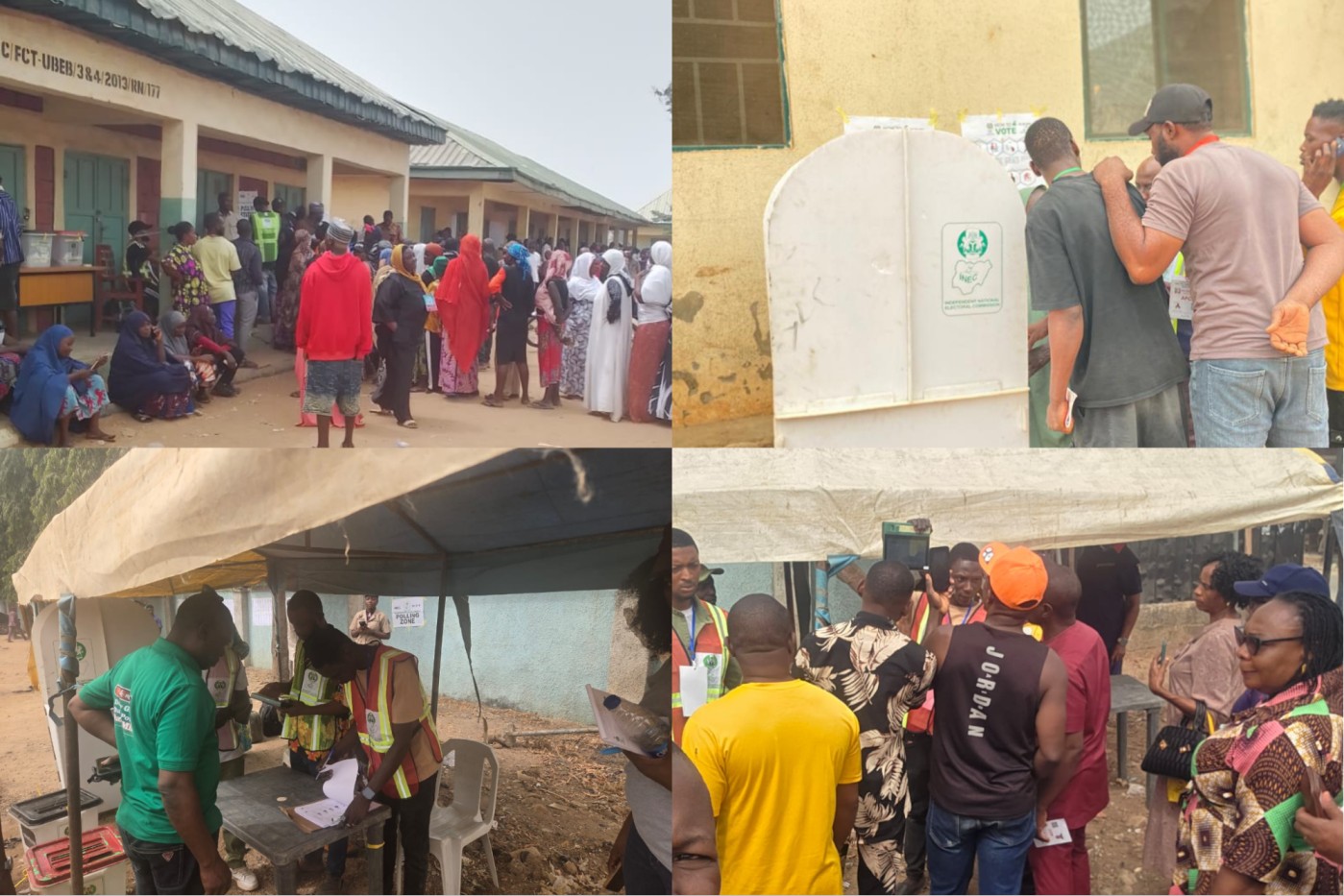
Dataphyte observers reported that tensions flared in several polling units as disagreements between election officials and voters prompted the increased deployment of security personnel across parts of the Federal Capital Territory (FCT).
Insight FCT Area Council Elections: Nearly Three in Ten Voters Turned Out in Past Elections

FCT 2026 Elections
Six area councils in the Federal Capital Territory (FCT) head to the polls today to decide who will emerge as chairman and which political parties will take control of the area councils. However, there are indications that voter turnout may be low, as historical data show that residents have consistently recorded weak participation in local elections. Findings indicate that fewer than four in every 10 registered voters typically cast their ballots on election day.
Although about 1.6 million people registered for the election, the Independent National Electoral Commission (INEC) reports that 1.58 million voters, representing 94.4 per cent, have collected their Permanent Voter Cards (PVCs), making them eligible to vote.
Voters are expected to cast their ballots across 2,822 polling units to elect six area council chairmen and 62 councillors, with a total of 570 candidates contesting the positions.
Between 2013 and 2022, four area council elections were conducted in the FCT and data from previous elections show that turnout in area council chairmanship polls has remained below 30 per cent.
Findings by Dataphyte show that most executive seats have largely been dominated by the Peoples Democratic Party (PDP) and the All Progressives Congress (APC), leaving candidates from 17 other political parties with slim chances of securing any seats in today’s election.
What data says
According to a review of media reports from the results of four past election cycles for FCT area councils, in the most recent election in 2022, only 261,485 out of about 1.3 million registered voters cast their ballots, representing 19 per cent turnout, with the six chairmanship seats shared between candidates of the APC and PDP.
Similarly, in the 2013 election, only 16 per cent of more than 900,000 registered voters participated. In 2016, although the exact number of accredited voters could not be independently verified, multiple reports indicated that about 225,000 of over 800,000 registered voters cast their ballots, representing roughly 25 per cent turnout.
For the 2019 local government election, Dataphyte could not obtain the total number of accredited voters from the 1.3 million registered voters. However, a report from one area council showed that only 44,250 of 224,737 registered voters were accredited, representing a 19.7 per cent turnout.
In a separate analysis, Dataphyte examined voter participation in Abuja during Nigeria’s general elections to determine whether similarly low turnout patterns occur at the national level. The findings show that although turnout in general elections has remained below 50 per cent, it is still significantly higher than participation in FCT area council polls. For instance, Nigeria’s 2019 general election recorded a turnout of 31 per cent, the lowest in Nigeria’s history, yet this figure exceeds the turnout recorded in all FCT area council elections since 2013.
Amid several political developments across the FCT, it remains uncertain whether the campaigns of candidates will be enough to mobilise greater public participation in today’s election.
Ahead of the polls, the FCT Police Command announced a 12-hour restriction on movement across the territory as part of security measures to ensure a peaceful and orderly process. Similarly, the Minister of the Federal Capital Territory, Nyesom Wike, imposed a curfew beginning at 8 p.m. on Friday, a move that drew criticism from some party candidates.